

Compression ratio is a fundamental performance parameter in industrial air compression systems. It quantifies a machine's ability to increase air pressure and serves as a critical metric for evaluating equipment efficiency, selecting appropriate models, and optimizing system design. Understanding this parameter is essential for engineers and maintenance teams aiming to balance operational costs with reliability.
This technical guide details the definition, calculation methods, and engineering significance of the compression ratio. By integrating precise measurement techniques with practical application strategies, operators can ensure their compressed air systems operate within optimal parameters, minimizing energy waste and extending equipment lifespan.
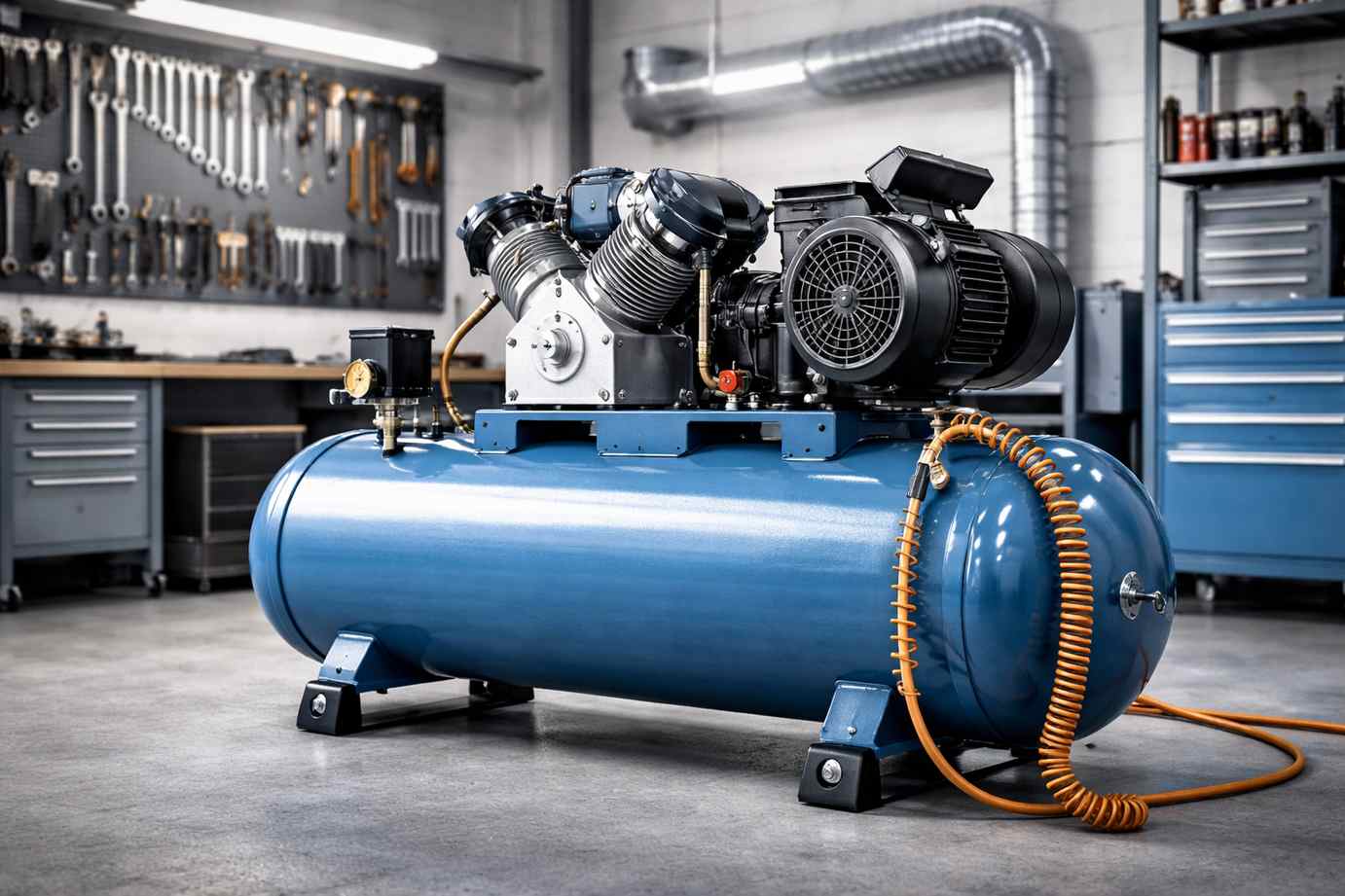
Definition and Fundamental Principles
The compression ratio, often denoted by the symbol ε, is defined as the ratio of the absolute discharge pressure to the absolute suction pressure of the air compressor. Mathematically, it is expressed as ε = P2 / P1, where P2 represents the discharge pressure and P1 represents the suction pressure. It is imperative to note that these values must be in absolute pressure units, not gauge pressure.
Absolute pressure is calculated by adding the local atmospheric pressure to the gauge pressure reading. For instance, if a compressor operates at a gauge pressure of 0.7 MPa and the local atmospheric pressure is 0.1 MPa, the absolute discharge pressure is 0.8 MPa. This distinction is vital because gauge pressure does not account for ambient atmospheric conditions, which vary with altitude and weather.
Industry standards consistently emphasize that compression ratio is a dimensionless value derived from absolute pressures. As noted in technical resources, the ratio is simply the absolute discharge pressure leaving the compressor divided by the absolute suction pressure. This baseline definition ensures consistent performance evaluation across different geographic locations and operating environments. For added field context, How to Calculate Compressor Compression Ratio and Why It Matters. It notes that Compressor compression ratio is calculated by dividing the absolute discharge pressure by the absolute inlet pressure (CR = P_discharge / P_inlet). A practical reference is Why Compression Ratio Matters - HVAC School. It notes that In A/C and refrigeration, the compression ratio is simply the absolute discharge pressure leaving the compressor divided by the absolute suction pressure.
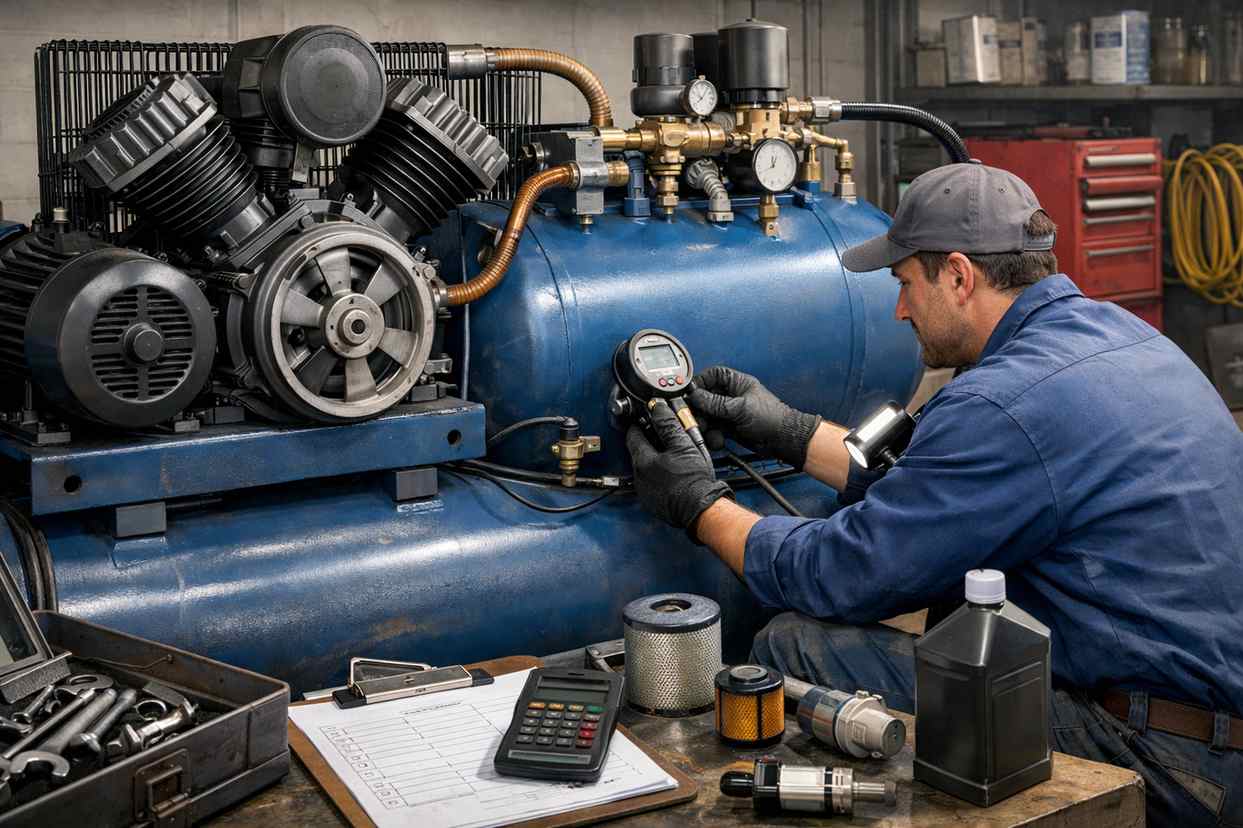
Step-by-Step Calculation Methodology
Accurate calculation requires precise determination of both suction and discharge pressures. For open-type compressors, the suction pressure (P1) is generally equivalent to the local atmospheric pressure. However, in closed-loop or specialized intake systems, P1 may differ due to filter resistance, piping losses, or intentional pressurization. Factors such as altitude and intake air temperature significantly influence this baseline value.
The discharge pressure (P2) is typically indicated on the compressor nameplate as gauge pressure. To derive the compression ratio, this value must be converted to absolute pressure by adding the prevailing atmospheric pressure. For example, a standard atmospheric pressure of 14.7 psia combined with a discharge gauge pressure resulting in 114.7 psia absolute yields a compression ratio of approximately 7.8:1.
Consider a practical scenario: a compressor with a rated gauge pressure of 0.7 MPa operating at sea level (0.1 MPa atmospheric pressure). The suction pressure P1 is 0.1 MPa. The absolute discharge pressure P2 is 0.7 + 0.1 = 0.8 MPa. Applying the air compressor compression ratio calculation formula, ε = 0.8 / 0.1, results in a compression ratio of 8. This step-by-step approach ensures accurate performance benchmarking. For added field context, Compression Ratio - Quincy Compressor. It notes that For example, if an air compressor takes in air at a standard atmospheric pressure of 14.7 psia and discharges it at 114.7 psia, the compression ratio is 7.8:1. A practical reference is Compressor Formulas: A Free Cheat Sheet. It notes that The compression ratio is calculated as P1/P2, where P1 is the inlet pressure and P2 is the outlet pressure. The resource also covers the volume flow rate formula.
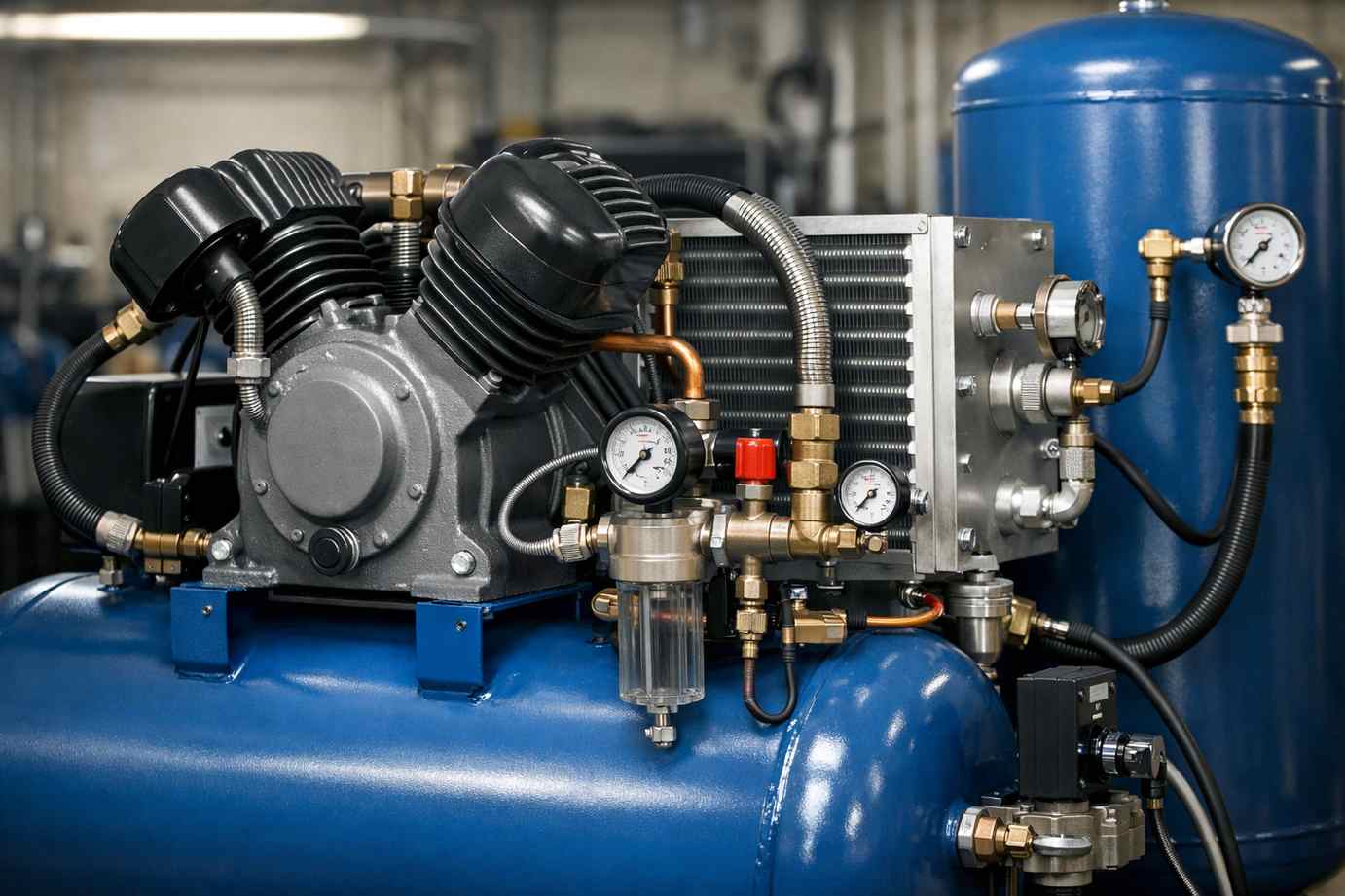
Impact on Performance and Efficiency
The compression ratio directly influences key performance metrics, including discharge volume, power consumption, and thermal output. As the ratio increases, volumetric efficiency typically decreases due to higher internal leakage and re-expansion of trapped gas. Consequently, the actual air delivery may drop even if the compressor runs at full speed, leading to inefficiencies in meeting demand.
Thermodynamically, compression is largely an adiabatic process, meaning higher ratios result in significant temperature rises. The compression ratio determines the theoretical discharge temperature, assuming no internal losses. As discharge pressure increases, the corresponding rise in temperature can stress components and degrade lubricants if not properly managed through cooling systems.
Energy consumption is also closely tied to this parameter. Higher compression ratios require more work input per unit of air delivered, increasing specific power usage. In HVAC and refrigeration contexts, maintaining an appropriate ratio is crucial; if the ratio falls below certain thresholds, such as 11:1 in specific applications, compressor capacity diminishes significantly, preventing the system from achieving target operational conditions. For added field context, Why Compression Ratio Matters. It notes that The compression ratio determines the theoretical discharge temperature based on adiabatic compression, assuming no internal losses. A practical reference is Compression Ratio Guidelines in HVAC. It notes that The compression ratio should be at least 11:1. If it falls below this threshold, compressor capacity diminishes significantly, preventing the system from achieving the target temperature.
Reliability and Mechanical Considerations
Excessively high compression ratios can adversely affect equipment reliability by increasing mechanical stress on pistons, bearings, and seals. High internal pressures and temperatures accelerate component wear and may lead to premature failure. Lubrication efficiency is particularly vulnerable, as excessive heat can reduce oil viscosity, compromising the protective film between moving parts and increasing frictional wear.
Sealing integrity is another critical concern. Elevated temperatures accelerate the aging of elastomeric seals and gaskets, potentially leading to leaks that further reduce efficiency and increase maintenance frequency. Different compressor types have distinct operational limits; for instance, piston compressors can handle ratios of 10–15, while screw compressors typically operate efficiently within a 5–8 range.
Centrifugal compressors, by contrast, usually maintain a compression ratio of less than 2 per stage. Selecting a compressor with a ratio aligned with its design limits is essential for long-term reliability. Operators must balance the need for high pressure with the mechanical constraints of the chosen technology to avoid overstressing the system. For added field context, Compression Ratio - Wikipedia. It notes that Higher loads require lower compression ratios to increase power output, while lower loads benefit from higher ratios to improve efficiency and reduce fuel consumption. A practical reference is HVAC Compression Ratios & Information - AC & Heating Connect. It notes that The compression ratio is the ratio of the absolute discharge pressure (psia) to the absolute suction pressure (psia).
Optimization Strategies for Industrial Systems
Optimizing the compression ratio involves both design choices and operational adjustments. For applications requiring high final pressures, multi-stage compression is recommended. This approach divides the total pressure rise into smaller increments, reducing the ratio per stage and allowing for intercooling. Intercooling lowers the air temperature between stages, which improves volumetric efficiency and reduces the power required for subsequent compression.
Intake conditions play a pivotal role in optimization. Minimizing pressure drops across intake filters and piping ensures that the suction pressure remains close to atmospheric levels, preventing unnecessary increases in the effective compression ratio. Regular maintenance of filtration elements, such as those provided by specialized suppliers, helps maintain stable intake conditions and protects downstream components.
Furthermore, enhancing lubrication and cooling systems supports optimal operation under varying loads. Effective cooling controls discharge temperatures, while proper lubrication reduces mechanical friction. By balancing the compression ratio with flow rate requirements and energy considerations, facilities can achieve significant cost savings and extend the operational life of their compressed air infrastructure.
Brand Comparison Snapshot
| Brand | Positioning | Strength | Recommended Scenario |
|---|---|---|---|
| Kepuke Filter | Application-focused compressed air treatment supplier | Fast response for filtration, dryers, and after-treatment support | Optimizing intake filtration to reduce pressure drop and maintain stable compression ratios |
| Atlas Copco | Global compressor and utility-system platform | Broad compressor, controller, and air treatment portfolio | Selecting multi-stage compressors to manage high compression ratios and discharge temperatures |
| Kaeser | Efficiency-driven compressed air system specialist | Good fit for energy-focused compressor room optimization | Balancing compression ratio with energy consumption for cost-effective system design |
| Ingersoll Rand | Industrial reliability and service-oriented brand | Strong installed base and maintenance support coverage | Maintaining volumetric efficiency and preventing leakage in high-ratio operations |
| Sullair | Heavy-duty compressor platform brand | Durable compressor packages for demanding operating environments | Ensuring mechanical reliability under high stress from elevated compression ratios |
FAQ
Q: What data points are critical before adjusting the compression strategy?
A: Before modifying operations, verify current suction and discharge absolute pressures, intake air temperature, and filter differential pressure. Ensure that any changes align with the manufacturer's specified limits to avoid voiding warranties or causing mechanical stress.
Q: How do maintenance logs inform future compression ratio decisions?
A: Historical data on discharge temperatures, oil analysis, and energy consumption trends help identify if the current ratio is causing excessive wear. Consistent overheating or rising specific power usage may indicate that the ratio is too high for the existing cooling or lubrication setup.
Q: How should operators validate system performance after implementation?
A: Monitor volumetric efficiency and specific power consumption post-adjustment. Compare actual discharge temperatures against theoretical adiabatic calculations. If temperatures exceed safe limits or flow rates drop significantly, reassess the intake conditions and staging configuration.
Q: Which supplier capabilities support long-term reliability?
A: Prioritize suppliers offering robust after-treatment solutions, such as high-efficiency filters and dryers, to minimize pressure drops. Technical support for multi-stage configurations and access to genuine replacement parts for seals and valves are also critical for maintaining optimal ratios.
Q: Why is absolute pressure used instead of gauge pressure?
A: Absolute pressure accounts for atmospheric variations due to altitude and weather, providing a consistent baseline for thermodynamic calculations. Using gauge pressure would yield inaccurate ratios, especially in facilities at high elevations or with fluctuating ambient conditions.
Optimize Your Compressed Air System Efficiency
Ensure your air compressor operates at peak efficiency with precise filtration and after-treatment solutions. Kepuke Filter provides expert support to minimize intake pressure drops and maintain stable compression ratios, reducing energy costs and extending equipment life.
Industry Maintenance Solutions
WhatsApp: +8615136730929
Conclusion
The compression ratio is a core parameter influencing the performance, reliability, and economic efficiency of air compressors. Accurate calculation using absolute pressures and careful consideration of operational limits are essential for optimal system design. By implementing multi-stage compression, optimizing intake conditions, and maintaining robust cooling and lubrication systems, engineers can mitigate the negative effects of high ratios.
Ultimately, balancing the compression ratio with specific application requirements leads to reduced energy consumption and lower maintenance costs. Regular monitoring and strategic adjustments ensure that compressed air systems remain efficient and reliable, supporting sustained industrial productivity.