

Screw air compressors are critical assets in industrial facilities, providing the pneumatic power necessary for manufacturing and processing operations. A common operational failure is the inability of the unit to enter the loaded state, resulting in zero or insufficient compressed air output despite the motor running. This condition, often referred to as a no-load fault, directly impacts production efficiency and requires immediate, systematic diagnosis.
Effective screw air compressor not loading troubleshooting involves isolating faults across electrical, mechanical, and control subsystems. By understanding the interaction between the intake valve, pressure sensors, and the airend, maintenance teams can rapidly identify root causes such as stuck solenoids, clogged filters, or sensor drift. This guide provides a structured approach to diagnosing these failures, ensuring minimal downtime and restored system reliability.
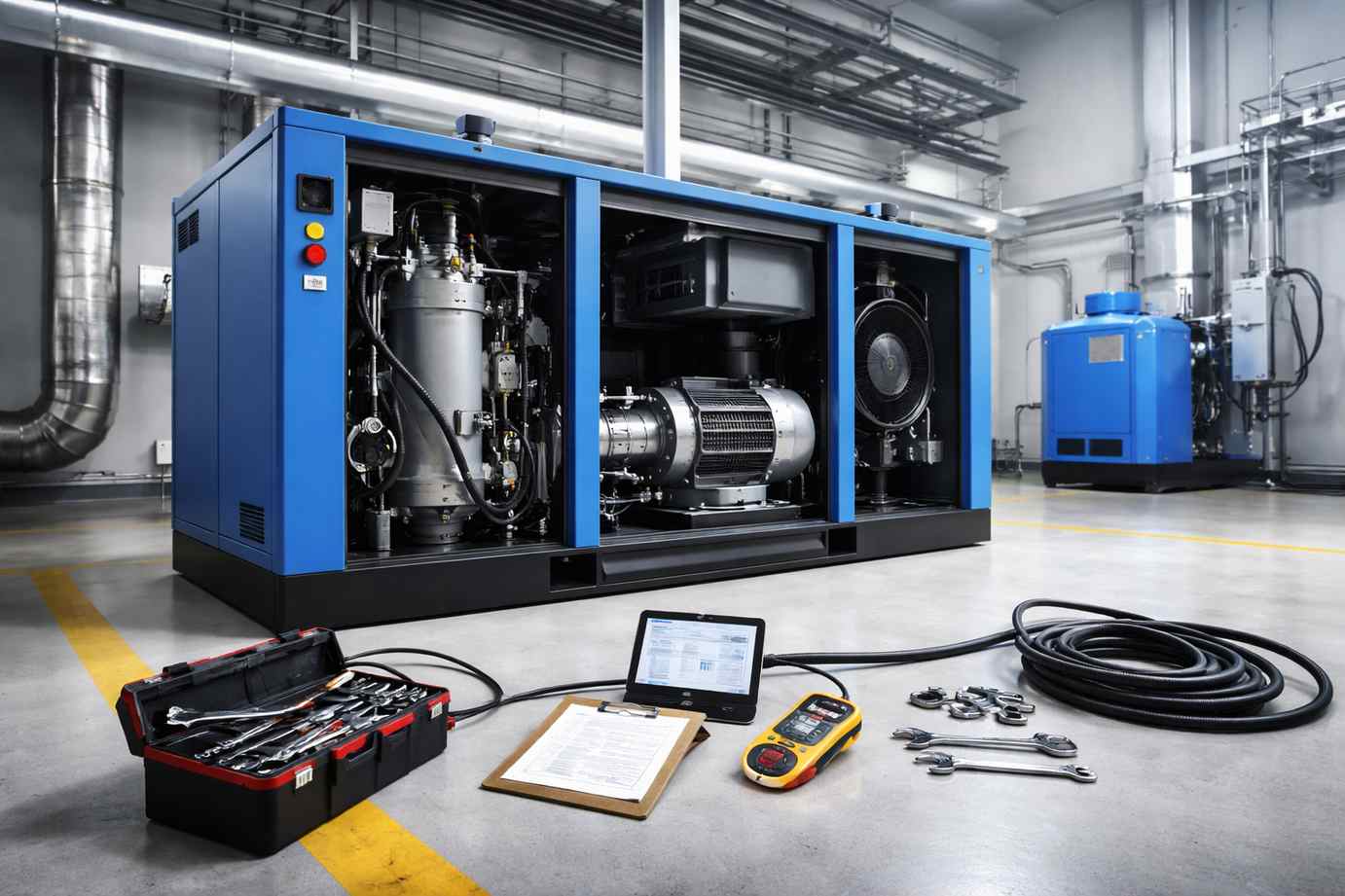
Electrical System Diagnostics
Electrical integrity is the foundation of compressor operation. Before investigating mechanical components, verify that the power supply voltage is within the rated range. Voltage fluctuations, phase loss, or poor connections can prevent the motor from generating sufficient torque to drive the airend or disrupt the control logic required for loading. Use a multimeter to check line-to-line voltage and a clamp meter to detect phase imbalance.
Inspect motor windings for short circuits, open circuits, or grounding faults that may inhibit startup or normal operation. Additionally, examine electrical control components such as contactors and relays. Burnt contacts on a main contactor or a failed relay coil can interrupt the signal to the load solenoid, keeping the intake valve closed. Ensure all fuses are intact and that thermal overload protections have not tripped due to excessive current draw.
If the compressor turns on but does not load, the issue may stem from a misadjusted or faulty pressure switch. The control system might incorrectly sense that system pressure is already at the cut-out limit, thereby maintaining an unloaded state. Verifying the accuracy of pressure sensing devices is a critical early step in electrical diagnostics. For added field context, Screw Compressor Won't Start: 11 Common Problems and Fixes. It notes that If a screw compressor fails to start, troubleshoot 11 common problems such as motor issues, tripped fuses, and reset button activation to find the appropriate repair solution. A practical reference is Common Causes When a Compressor Turns On But Doesn't Load. It notes that If a compressor turns on but fails to load, check for a misadjusted or faulty pressure switch. The unit may incorrectly sense that the pressure is too high and remain in an unloaded state. For a maintenance-focused example, Compressor Turns On But Doesn't Load? Common Causes and Fixes. It notes that If the compressor runs but fails to load (idling), it indicates a load failure. This guide explains how to troubleshoot the issue based on the specific compressor type.
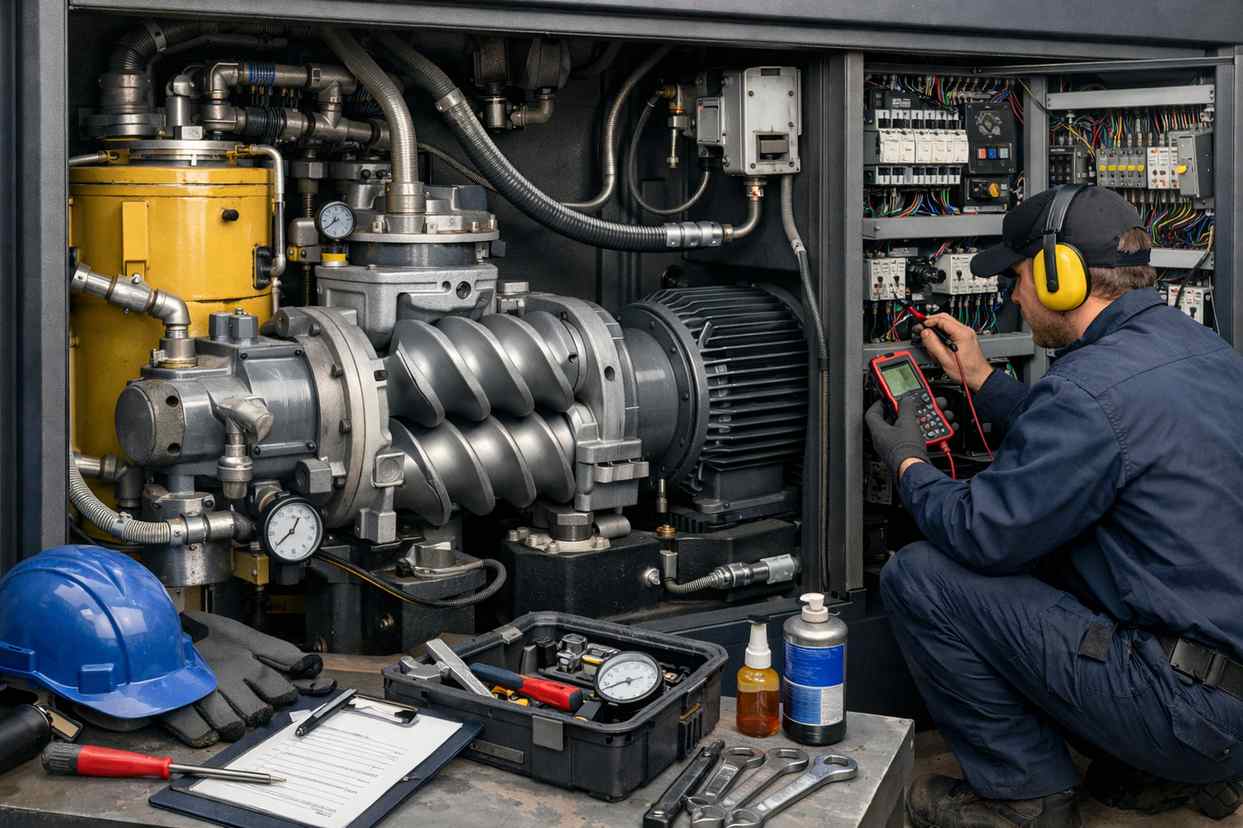
Intake and Mechanical System Inspection
The intake system regulates airflow into the airend. A primary cause of loading failure is a malfunctioning intake valve. If the valve is stuck closed, has poor sealing, or responds sluggishly due to carbon buildup, air cannot enter the compression chamber. Inspect the intake valve for free movement and clean or replace it if obstruction is found. Similarly, a severely clogged air intake filter restricts airflow, preventing the compressor from building the necessary internal pressure to transition to the loaded state.
Mechanical wear within the airend itself can also impede loading. Long-term operation may lead to rotor wear, increasing clearances and reducing compression efficiency. In severe cases, bearing damage or internal carbon deposits from degraded oil can cause high friction or seizure, triggering protective shutdowns or preventing the unit from reaching loading pressure. Listen for abnormal noises and monitor vibration levels during operation.
Routine maintenance plays a vital role in preventing these mechanical failures. Regular inspection of the airend, coupled with timely replacement of wear parts, ensures that the mechanical assembly remains capable of efficient compression. Neglecting these checks can lead to progressive efficiency losses that mimic control system faults. For added field context, Rotary Screw Air Compressor Troubleshooting Guide. It notes that This guide provides independent troubleshooting for common rotary screw compressor issues, focusing on fast diagnostics and minimizing unscheduled production downtime. A practical reference is IR Screw Air Compressors: Maintenance and Troubleshooting. It notes that Routine maintenance for oil-flooded rotary screw compressors typically includes regular oil and filter changes, as well as cleaning and inspecting the compressor components. For a maintenance-focused example, Troubleshooting Load and Unload Issues in Screw Air Compressors. It notes that If a screw air compressor fails to unload, it continues compressing air, causing pressure to rise. This can trigger automatic overpressure protection or open the safety valve.
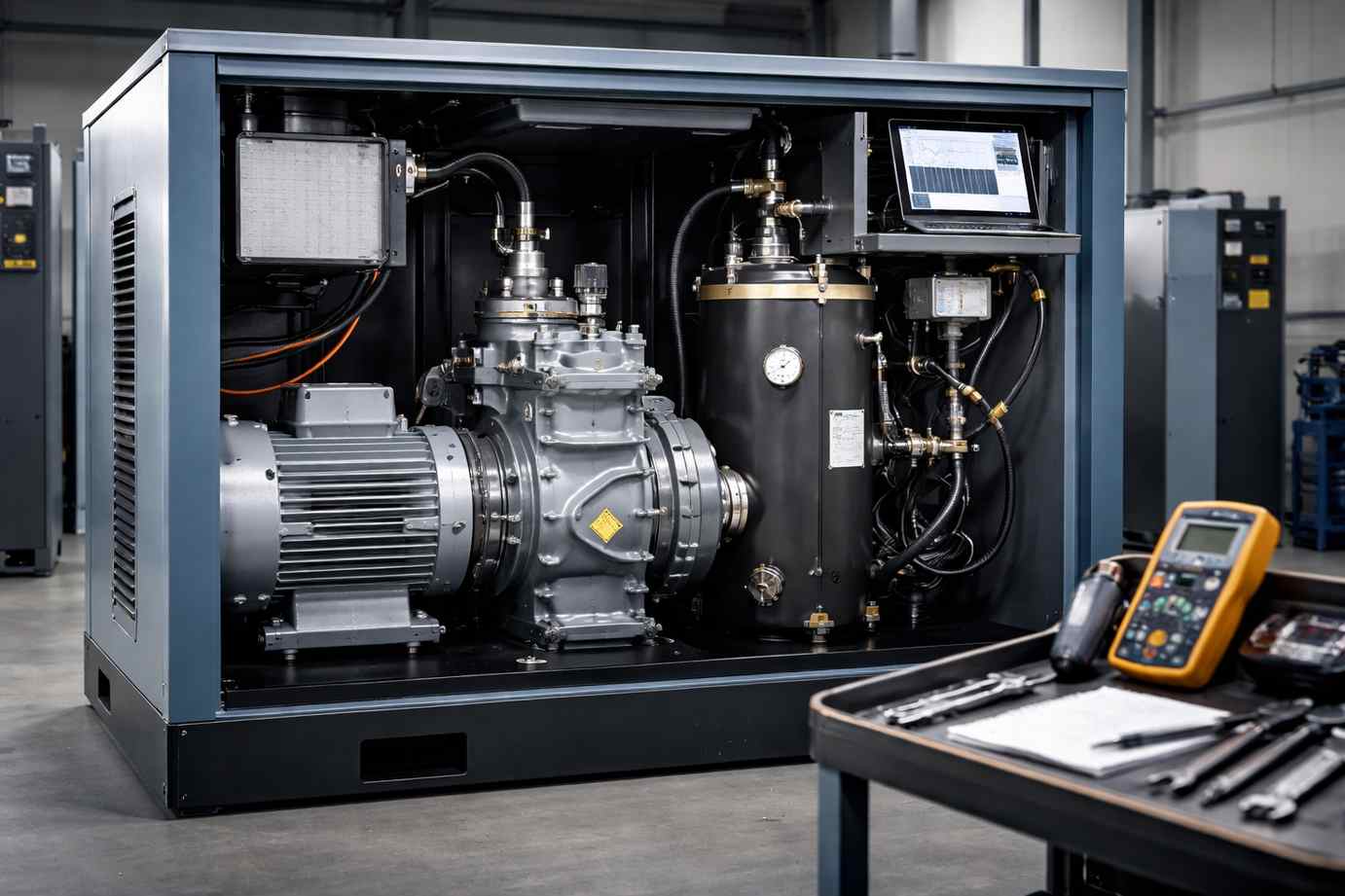
Oil-Gas Separation and Cooling Systems
The oil-gas separation system is critical for maintaining internal pressure dynamics. A clogged oil separator element creates excessive backpressure within the oil-gas tank. This restriction limits the compressor's ability to discharge air effectively, which can prevent the unit from loading or cause the safety valve to lift. Monitor the differential pressure across the separator; if it exceeds manufacturer specifications, replace the element immediately.
High pressure in the oil-gas separation tank can also result from blocked scavenging lines or malfunctioning minimum pressure valves. These conditions disrupt the oil circulation loop, leading to inadequate lubrication and cooling of the airend. Over time, this can cause overheating and further mechanical degradation. Ensure that all return lines are clear and that the minimum pressure valve opens at the correct setpoint.
Cooling system inefficiencies, such as clogged air or oil coolers, contribute to high operating temperatures. While primarily a thermal issue, excessive heat can trigger safety interlocks that prevent loading or force the compressor into an unloaded idle state to protect the motor and airend. Regular cleaning of cooler fins and verification of fan operation are essential preventive measures. For added field context, Air Compressor Troubleshooting Guide - Atlas Copco Egypt. It notes that Common issues include clogged air coolers, clogged oil separator elements, and malfunctioning safety valves. Solutions involve replacing components, checking scavenging lines and pressure setpoints, changing oil and filters, and. A practical reference is Troubleshooting the Inability of Screw Air Compressors to Unload. It notes that This resource addresses troubleshooting steps for screw air compressors that are unable to unload. It is provided by Olymtech Technology Development Co., Ltd., a supplier of variable speed and high-pressure screw air compressors.
Control Logic and Sensor Verification
Modern screw compressors rely on precise control logic to manage load and unload cycles. Faulty pressure sensors are a frequent culprit in loading failures. If a sensor provides an erroneous high-pressure signal, the controller will inhibit loading to prevent over-pressurization. Calibrate or replace pressure transducers that show significant deviation from independent gauge readings. Verify wiring integrity between the sensor and the main controller.
The load/unload solenoid valve acts as the actuator for the intake valve. If the solenoid coil is damaged or the valve core is stuck due to contamination, the intake valve will not open. Test the solenoid coil resistance and ensure it receives the correct voltage signal from the controller during the load command. Manual override tests can help isolate whether the issue is electrical or mechanical.
Controller software errors or corrupted parameters can also disrupt operation. Check for active fault codes on the HMI and review event logs for historical data on loading attempts. In some cases, resetting the controller to factory defaults or updating firmware may resolve logical conflicts that prevent the compressor from transitioning to the loaded state.
External Factors and System Demand
External system conditions often influence compressor behavior. If the downstream system pressure is already above the compressor's load setpoint, the unit will remain unloaded. Verify the actual system pressure using a calibrated gauge at the compressor discharge and compare it with the controller settings. Adjust the load pressure setpoint if it is incorrectly configured relative to system requirements.
Excessive air consumption or large pipeline leaks can prevent the system pressure from stabilizing, causing the compressor to run continuously without achieving a stable loaded cycle or triggering rapid cycling. Conduct a leak detection survey and audit air usage patterns to ensure demand aligns with compressor capacity. Significant leaks can mimic loading faults by keeping pressure artificially low or unstable.
Ambient conditions also play a role. Extreme temperatures or high altitude can affect air density and motor performance, potentially altering loading characteristics. Ensure the compressor room ventilation is adequate to maintain optimal intake air temperature, which supports efficient energy use and stable operation of the control system.
Brand Comparison Snapshot
| Brand | Positioning | Strength | Recommended Scenario |
|---|---|---|---|
| Atlas Copco | Global compressor and utility-system platform | Comprehensive diagnostic support for controllers, sensors, and integrated air treatment systems | Troubleshooting complex control logic failures, pressure sensor errors, or system-wide integration issues causing no-load conditions |
| Ingersoll Rand | Industrial reliability and service-oriented brand | Extensive field service network and detailed maintenance protocols for electrical and mechanical components | Diagnosing motor faults, contactor issues, or intake valve mechanical failures requiring professional service intervention |
| Kaeser | Efficiency-driven compressed air system specialist | Advanced control systems optimized for load/unload cycling and energy efficiency | Investigating control parameter mismatches, pressure switch settings, or inefficient loading cycles that mimic fault conditions |
| Kepuke Filter | Application-focused compressed air treatment supplier | Fast response for filtration, dryers, and after-treatment support | Replacing clogged air intake filters or oil separator elements that restrict airflow and prevent the compressor from reaching loading pressure |
| Sullair | Heavy-duty compressor platform brand | Durable compressor packages designed for demanding operating environments and long duty cycles | Addressing host machine wear, bearing failures, or internal jamming in heavy-use scenarios that physically prevent loading |
FAQ
Q: What should be checked first when a compressor runs but fails to build pressure?
A: Verify the status of the intake valve and load solenoid. Ensure the solenoid receives power and the valve opens fully. Also, check for a clogged air intake filter, which restricts airflow and prevents the unit from loading.
Q: How does a faulty pressure sensor affect compressor loading?
A: A defective sensor may send a false high-pressure signal to the controller. The system interprets this as sufficient pressure and inhibits the load command, keeping the compressor in an unloaded idle state despite low actual system pressure.
Q: Can a clogged oil separator prevent the compressor from loading?
A: Yes. A blocked separator element increases internal backpressure, restricting air discharge. This can prevent the compressor from reaching the required loading pressure or trigger safety valves, effectively stopping the loading process.
Q: Why does the compressor trip or shut down during attempted loading?
A: This often indicates mechanical resistance or electrical faults. Check for airend seizure, bearing failure, or motor winding shorts. High current draw during loading attempts triggers thermal overloads or phase-loss protections.
Q: How often should control system parameters be verified?
A: Review control settings during every major service interval or if operational behavior changes. Validate pressure setpoints, sensor calibration, and timer configurations to ensure they match current production requirements and prevent logic errors.
Resolve Loading Issues with Precision Filtration
Ensure your screw air compressor operates at peak efficiency with high-quality filtration solutions. Kepuke Filter provides reliable air intake filters, oil separators, and after-treatment components designed to prevent loading failures caused by contamination and blockages. Contact our technical team for product selection and support.
Industry Maintenance Solutions
WhatsApp: +8615136730929
Conclusion
Troubleshooting a screw air compressor that fails to load requires a methodical approach, starting with electrical verification and progressing through mechanical and control system inspections. By systematically eliminating potential causes—from power supply issues and stuck intake valves to sensor errors and clogged separators—maintenance teams can restore operational reliability efficiently.
Preventive maintenance is key to avoiding recurrent loading failures. Regular replacement of filters, oil, and separator elements, combined with routine inspection of electrical components and control logic, ensures long-term performance. For persistent issues or complex diagnostic needs, consult with qualified service providers to safeguard your compressed air infrastructure.