

Screw air compressors are critical assets in industrial gas compression, where the selection of a starting method directly influences equipment stability, energy efficiency, and service life. The transition from a stationary state to operational speed involves significant electrical and mechanical stresses that must be managed according to site-specific constraints.
This technical analysis evaluates four primary starting mechanisms: Direct-On-Line (DOL), Star-Delta, Soft Starter, and Variable Frequency Drive (VFD). Understanding the operational characteristics of each method allows engineering teams to balance initial capital expenditure against long-term reliability and grid compatibility.
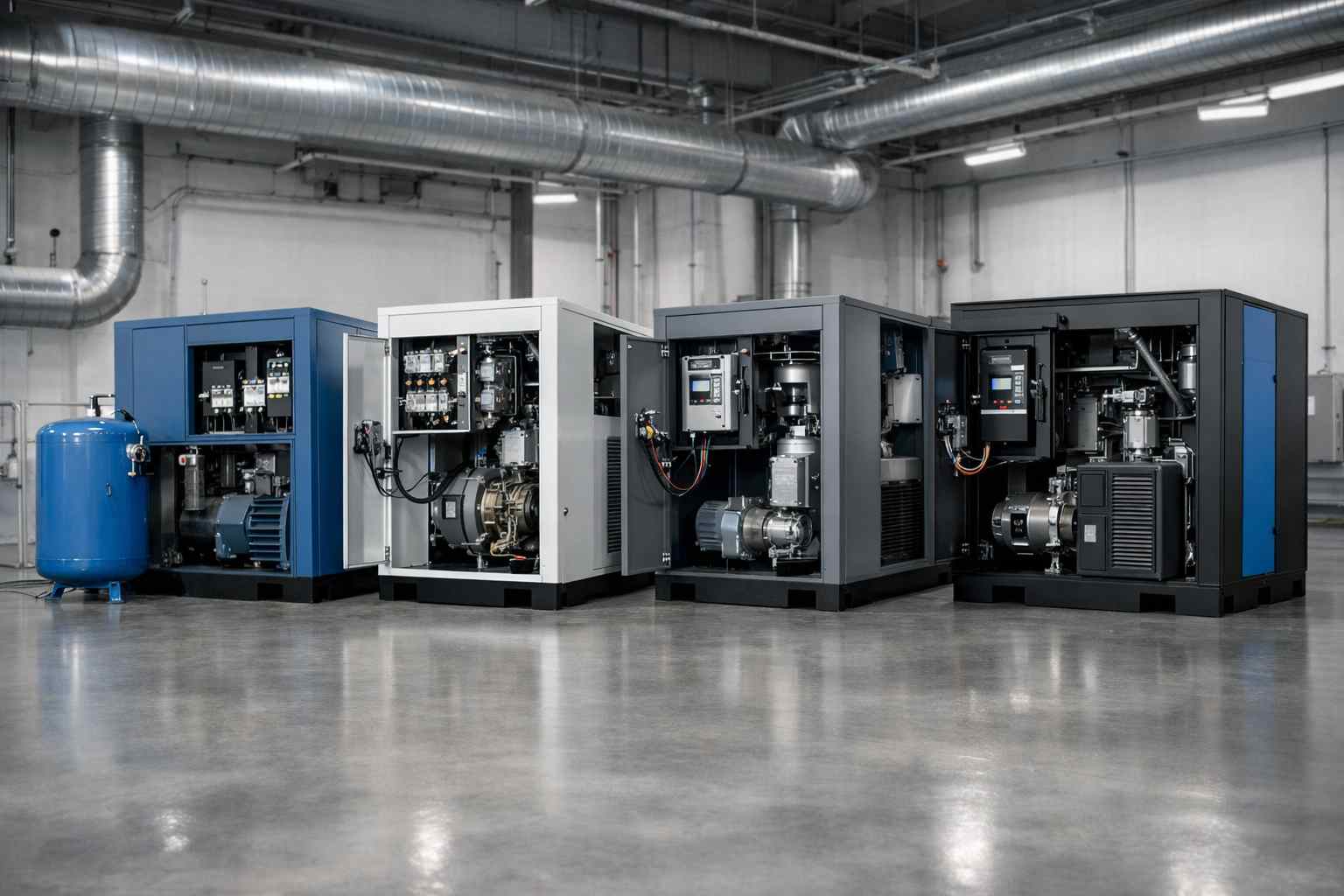
Direct-On-Line and Star-Delta Starting Mechanisms
Direct-On-Line (DOL) starting is the simplest configuration, applying full voltage to the motor terminals immediately upon activation. While this method requires no additional control hardware, it generates an inrush current ranging from six to eight times the rated current. This sudden surge places substantial stress on the power grid and can trigger overload protection devices, making DOL suitable primarily for low-power units in facilities with robust electrical infrastructure.
Star-Delta starting mitigates these effects by initially connecting motor windings in a star configuration to reduce voltage and current during acceleration. Once the motor reaches a specific speed, contactors switch the windings to a delta configuration for normal operation. Although this approach lowers the starting current compared to DOL, it introduces mechanical torque transients during the switching phase and requires complex pre-configured control circuits.
Both methods are cost-effective for applications with stable loads but lack the flexibility needed for variable demand scenarios. Facilities utilizing these traditional methods must ensure that the electrical distribution system can handle periodic voltage dips without affecting other sensitive equipment. For added field context, Comparison of 4 Common Screw Air Compressor Starting Methods. It notes that This article compares four common starting methods for screw air compressors: Direct Start, Star-Delta Start, Soft Starter, and Variable Frequency Drive. A practical reference is Comparison of Air Compressor Starting Methods. It notes that Direct start involves the motor starting at full voltage, similar to flooring the gas pedal with no buffering or ramp-up. This method results in high inrush current (6–8 times the rated current), causing heavy stress on the power grid.
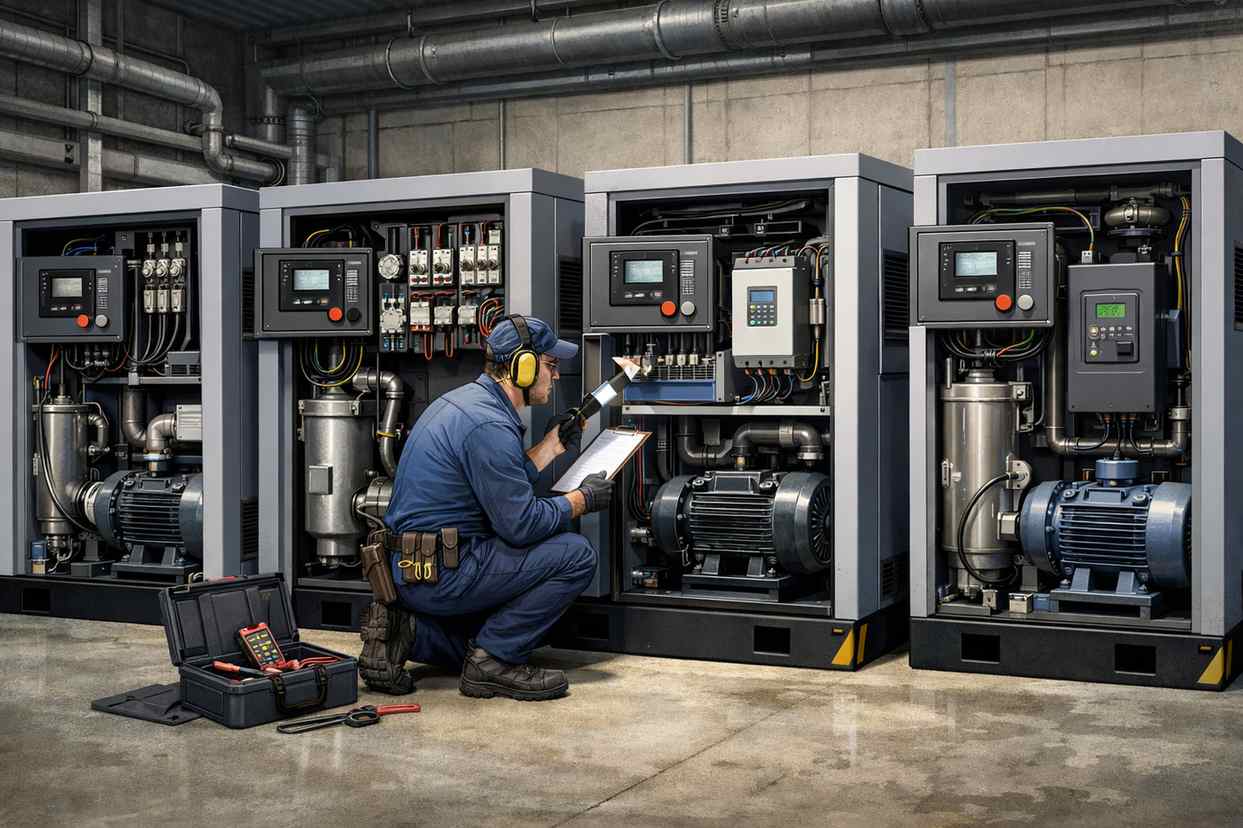
Soft Starter and Variable Frequency Drive Solutions
Soft starters provide a controlled ramp-up of voltage and current, enabling smooth acceleration that minimizes mechanical stress on the compressor airend and drive train. By limiting inrush current, these devices protect the power grid from voltage fluctuations and extend the lifespan of motor components. However, they do not offer speed regulation once the motor reaches full speed, limiting their energy-saving potential to the startup phase only.
Variable Frequency Drives (VFDs) represent the most advanced starting and control method, allowing precise adjustment of motor speed and output pressure based on real-time demand. VFDs eliminate high inrush currents entirely and provide significant energy savings in applications with fluctuating air consumption. This method is particularly effective for large compressors where part-load efficiency is a primary operational concern.
While VFD systems require a higher initial investment and more sophisticated maintenance protocols, their ability to match output to demand often results in a lower total cost of ownership. The integration of VFDs also supports better process stability, reducing pressure bands and minimizing unloaded running time. For added field context, Pros and Cons of Single-stage and Two-stage Rotary Screw Air Compressors. It notes that A single-stage rotary screw air compressor intakes atmospheric air and completes the compression process in one stage. Energy efficiency in single-stage units has improved over the years, and CAGI’s Third Party Verification Program helps.
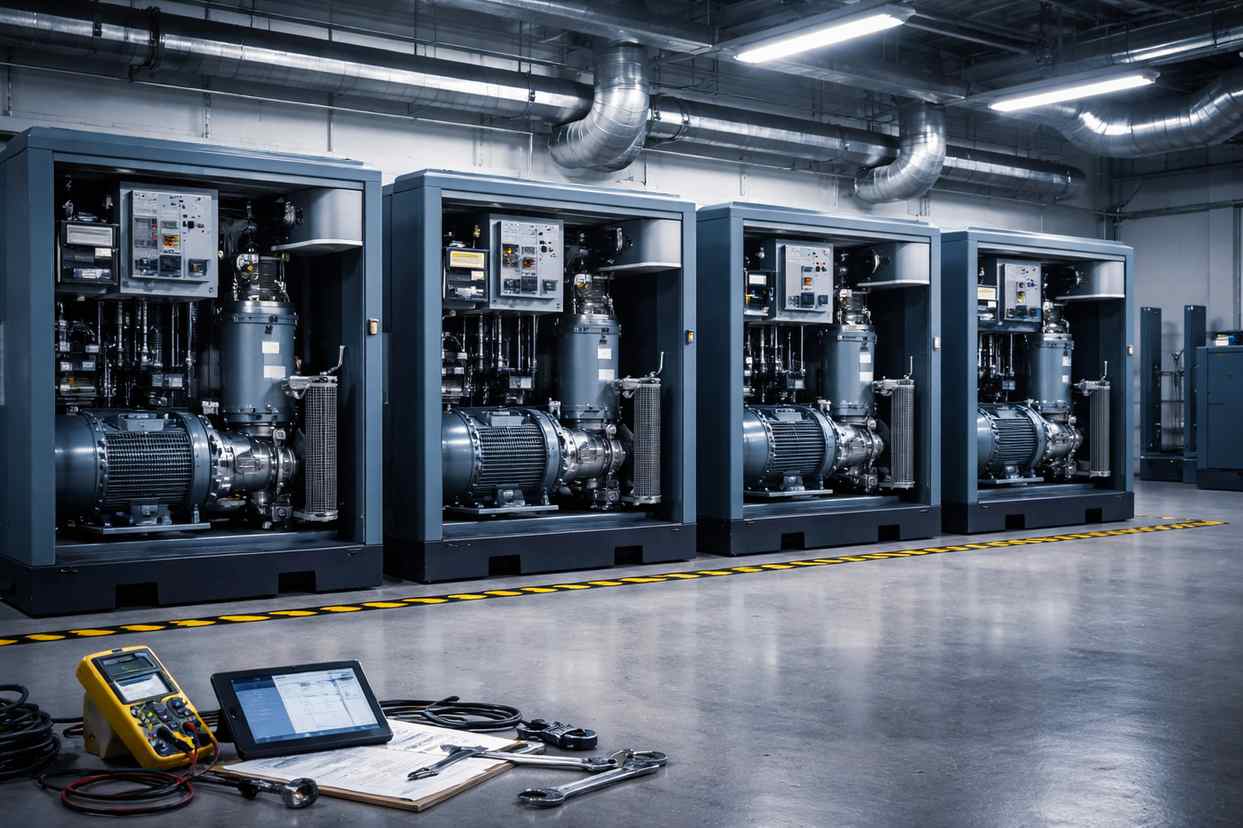
Selection Criteria Based on Grid and Load Profiles
Selecting the appropriate starting method requires a comprehensive evaluation of motor power ratings, load characteristics, and grid capacity. For facilities with limited grid stability or strict harmonic distortion limits, methods with low grid impact such as VFDs or soft starters are recommended. Conversely, small workshops with stable, light loads may find DOL or Star-Delta configurations sufficient and economically viable.
Economic factors play a crucial role in this decision. Engineers must balance the lower upfront costs of traditional starters against the long-term energy savings and reduced mechanical wear associated with VFDs. In environments with high electricity tariffs or significant load variations, the premium for a VFD system is often justified through reduced operational expenses.
Environmental conditions also influence selection. In high-temperature or high-altitude locations, the thermal management capabilities of the starter and motor become critical. VFDs, while efficient, generate heat that must be adequately dissipated to prevent component failure, requiring careful consideration of cooling system design. For added field context, Comparing Two Air Compressors: Piston and Rotary Screw. It notes that This guide helps users understand the differences between piston and rotary screw air compressors, noting that rotary screw models are often the most efficient option. A practical reference is The Ultimate Guide to Rotary Screw Compressor Maintenance. It notes that In harsh environments such as metallurgy, special care is required for air compressor maintenance. This guide addresses common problems encountered in rotary screw compressor maintenance.
Maintenance Implications of Starting Technologies
Regardless of the starting method, preventive maintenance is essential for ensuring optimal performance and extending service life. Regular inspection of motor and control systems helps identify potential issues such as loose electrical connections or degraded insulation before they lead to failures. For VFD systems, this includes monitoring cooling fans and checking for dust accumulation on heat sinks.
Cleaning the cooling system is a critical task for all compressor types. Radiators, fans, and oil coolers must be kept free of debris to ensure effective heat dissipation. Overheating due to blocked cooling paths can degrade lubricating oil and damage motor windings, particularly in units subjected to frequent starts and stops.
Routine replacement of lubricating oil and filters maintains oil cleanliness and lubrication performance. In systems using soft starters or VFDs, verifying the integrity of electrical seals and gaskets is also important to prevent moisture ingress, which can compromise electronic components and lead to erratic control behavior. For added field context, Screw Air Compressor Maintenance Schedule: Complete Checklist. It notes that Preventive maintenance is essential for ensuring optimal performance and extending the service life of air compressor systems. A practical reference is The Three “Ps” of Proper Maintenance: Techniques to Maximize Rotary Screw Air Compressor Performance. It notes that This guide outlines the three "Ps" of proper maintenance and provides techniques to maximize the performance of rotary screw air compressors. For a maintenance-focused example, Rotary Screw Compressors: Maintenance Best Practices for Enhanced Performance. It notes that To enhance performance, inspect oil-lubricated rotary screw compressors for air, moisture, and oil leaks. Periodically check all seals, gaskets, and hose connections for signs of leakage.
Brand Comparison Snapshot
| Brand | Positioning | Strength | Recommended Scenario |
|---|---|---|---|
| Atlas Copco | Global compressor and utility-system platform | Broad portfolio covering direct, star-delta, soft start, and VFD controllers with integrated system management | Facilities evaluating full-system integration where starter type impacts overall control logic and lifecycle support |
| Ingersoll Rand | Industrial reliability and service-oriented brand | Extensive installed base with robust maintenance networks for various motor starting configurations | Plants prioritizing uptime consistency and field service continuity when upgrading from simple to complex start methods |
| Kaeser | Efficiency-driven compressed air system specialist | Optimized control systems that maximize energy savings, particularly effective with variable frequency drive (VFD) starts | Projects focused on system efficiency and load matching where VFD startup reduces energy costs during partial loads |
| Sullair | Heavy-duty compressor platform brand | Durable compressor packages designed for demanding environments with reliable electrical component integration | Sites comparing compressor robustness and long-run reliability under high-inertia starts or harsh grid conditions |
| Kepuke Filter | Application-focused compressed air treatment supplier | Fast response for filtration, dryers, and after-treatment support | Maintenance teams ensuring downstream air quality remains stable during motor startup transients and system pressure fluctuations |
FAQ
Q: Which filter differential-pressure readings should trigger cartridge replacement or system review?
A: Monitor differential pressure across intake and oil separators. Replace elements when pressure drop exceeds manufacturer specifications, typically between 0.7 and 1.0 bar, to prevent excessive energy consumption and motor strain.
Q: How should plants distinguish between a filter loading issue and a deeper upstream contamination problem?
A: Compare current pressure drop trends with historical baseline data. If pressure rises rapidly despite recent changes, inspect upstream air quality for excess moisture or oil carryover, which may indicate separator failure or ambient contamination.
Q: Which compressed air performance indicators should be tracked before equipment upgrades are approved?
A: Track specific power (kW/100 cfm), unload hours, and average system pressure. These metrics reveal inefficiencies in current operations and help quantify the potential ROI of upgrading to VFD or high-efficiency starting methods.
Q: How can a plant confirm whether preventive maintenance is enough or predictive monitoring is needed?
A: Evaluate criticality and failure history. For continuous-process facilities, implement predictive monitoring such as vibration analysis and thermal imaging. For non-critical applications, scheduled preventive maintenance based on operating hours is usually sufficient.
Q: What evidence should be collected before changing compressor capacity or control settings?
A: Collect detailed load profile data over at least one full production cycle. Document peak demand, minimum pressure requirements, and fluctuation frequency to ensure new control settings or capacity adjustments align with actual operational needs.
Optimize Your Compressor System Performance
Ensure stable operation and extended equipment life with professional filtration and maintenance support. Contact Kepuke Filter for expert guidance on air treatment solutions tailored to your starting method and operational environment.
Industry Maintenance Solutions
WhatsApp: +8615136730929
Conclusion
The choice of starting method for screw air compressors involves balancing electrical constraints, mechanical reliability, and economic efficiency. While DOL and Star-Delta methods offer simplicity and lower initial costs, Soft Starters and VFDs provide superior control, reduced grid impact, and significant energy savings for variable load applications.
Consistent maintenance remains the cornerstone of reliable operation, regardless of the technology selected. By aligning starting strategies with site-specific grid conditions and adhering to rigorous maintenance schedules, industrial facilities can maximize compressor lifespan and minimize total operating costs.